
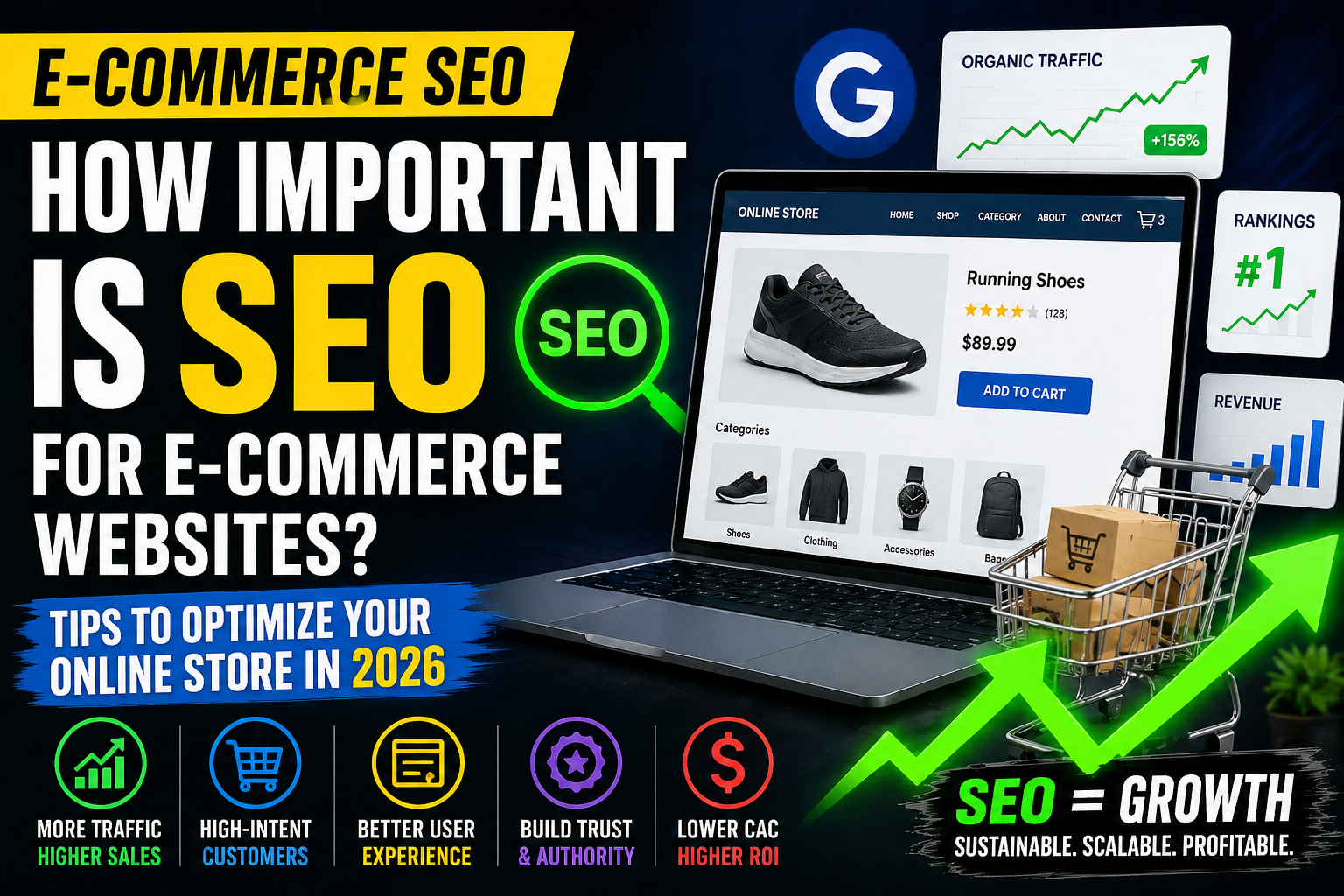
SEO for e-commerce is no longer optional.
In 2026, it’s the difference between:
- a store that prints revenue
- and a store that depends entirely on ads
Search engines like Google now evaluate not just keywords and backlinks, but intent, structure, and trust signals.
This means most online stores are not losing because of traffic.
They’re losing because of bad SEO architecture.
Why SEO Still Matters for E-commerce
1. Organic Traffic = Margin
Paid ads:
- cost increases every year
- reduce profit margins
SEO:
- compounds over time
- scales without proportional cost
👉 In many niches, SEO becomes the only sustainable acquisition channel.
2. High-Intent Traffic
E-commerce SEO is not about “traffic”.
It’s about buying intent:
- “buy running shoes size 42”
- “best CRM for Shopify store”
These users are already in decision mode.
3. Long-Term Asset
A well-optimized store becomes:
- a traffic engine
- a data source
- a brand signal
👉 SEO turns your store into an asset, not just a storefront.
What Changed in 2026
Modern e-commerce SEO is driven by:
- Search intent clustering
- Internal linking logic
- Product data quality
- UX signals
👉 Google now reads your store like a system, not a set of pages.
Core SEO Challenges in E-commerce
1. Thin Product Pages
Most stores:
- copy supplier descriptions
- add no unique value
Result:
- no rankings
- no differentiation
2. Duplicate Content
Same product across:
- categories
- filters
- variations
👉 creates index chaos
3. Crawl Budget Waste
Thousands of URLs:
- filters
- pagination
- parameters
👉 Google wastes time indexing garbage
4. Weak Internal Linking
Products often:
- isolated
- poorly connected
👉 no authority flow
E-commerce SEO Strategy (2026)
1. Keyword Research = Intent Mapping
Forget generic keywords.
Focus on:
- transactional: “buy”, “price”, “order”
- comparison: “best”, “vs”
- problem-solving: “how to choose”
👉 Build clusters, not isolated keywords.
2. Product Page Optimization
Your product page is your money page.
Must-have elements:
- Unique title with intent
- Real description (not supplier copy)
- Structured data (schema)
- Reviews (UGC)
- FAQ section
👉 Think: “decision page”, not “catalog entry”
3. Category Pages = SEO Gold
Most stores ignore this.
But category pages:
- rank easier
- capture broader intent
- drive volume
Optimize:
- intro content (not fluff)
- internal links
- filters handled correctly
4. Internal Linking System
This is where most stores fail.
Build:
- product → category
- category → related category
- blog → product
👉 Treat it like a graph, not a menu.
5. Technical SEO
Critical for scale.
Focus on:
- clean URLs
- canonical tags
- noindex for filters
- sitemap hygiene
👉 If your structure is broken, content won’t save you.
6. Content Layer (Underrated)
Add:
- buying guides
- comparisons
- use cases
Example:
- “How to choose running shoes for flat feet”
👉 This captures early-stage intent.
Platform-Specific Notes
If you’re using Shopify:
- limited URL control
- requires apps for SEO flexibility
If custom / OpenCart / Woo:
- more control
- higher responsibility
👉 flexibility = power + complexity
What Actually Moves Rankings in 2026
| Factor | Impact |
|---|---|
| Product content quality | High |
| Internal linking | High |
| Page intent match | High |
| Backlinks | Medium |
| Technical SEO | Critical |
| Keyword density | Low |
Common Mistakes
- Copy-paste product descriptions
- Ignoring category SEO
- Overusing filters (indexing everything)
- No content strategy
- Relying only on ads
Practical Growth Framework
Phase 1: Fix Structure
- URLs
- categories
- indexing
Phase 2: Optimize Money Pages
- product pages
- category pages
Phase 3: Add Content Engine
- guides
- comparisons
- blog
Phase 4: Scale
- internal linking
- automation
- programmatic SEO
Real Talk
Most e-commerce stores don’t fail because of competition.
They fail because:
they look like a database, not a product.
SEO in 2026 rewards:
- clarity
- intent
- usefulness
Basein.dev Angle (Where This Gets Interesting)
Instead of:
“how to optimize store”
Better angle:
👉 “how to turn store into traffic system”
Content ideas:
- “Why Most Shopify Stores Never Rank (And How to Fix It)”
- “From 0 to 10K SEO Traffic Without Ads”
- “E-commerce SEO as Infrastructure, Not Marketing”
Conclusion
SEO for e-commerce is still one of the highest ROI channels.
But it’s no longer about tricks.
It’s about building:
- structure
- intent alignment
- content depth
Do it right, and your store compounds.
Do it wrong, and you keep paying for traffic forever.
1 thought on “How Important Is SEO for E-commerce in 2026”